

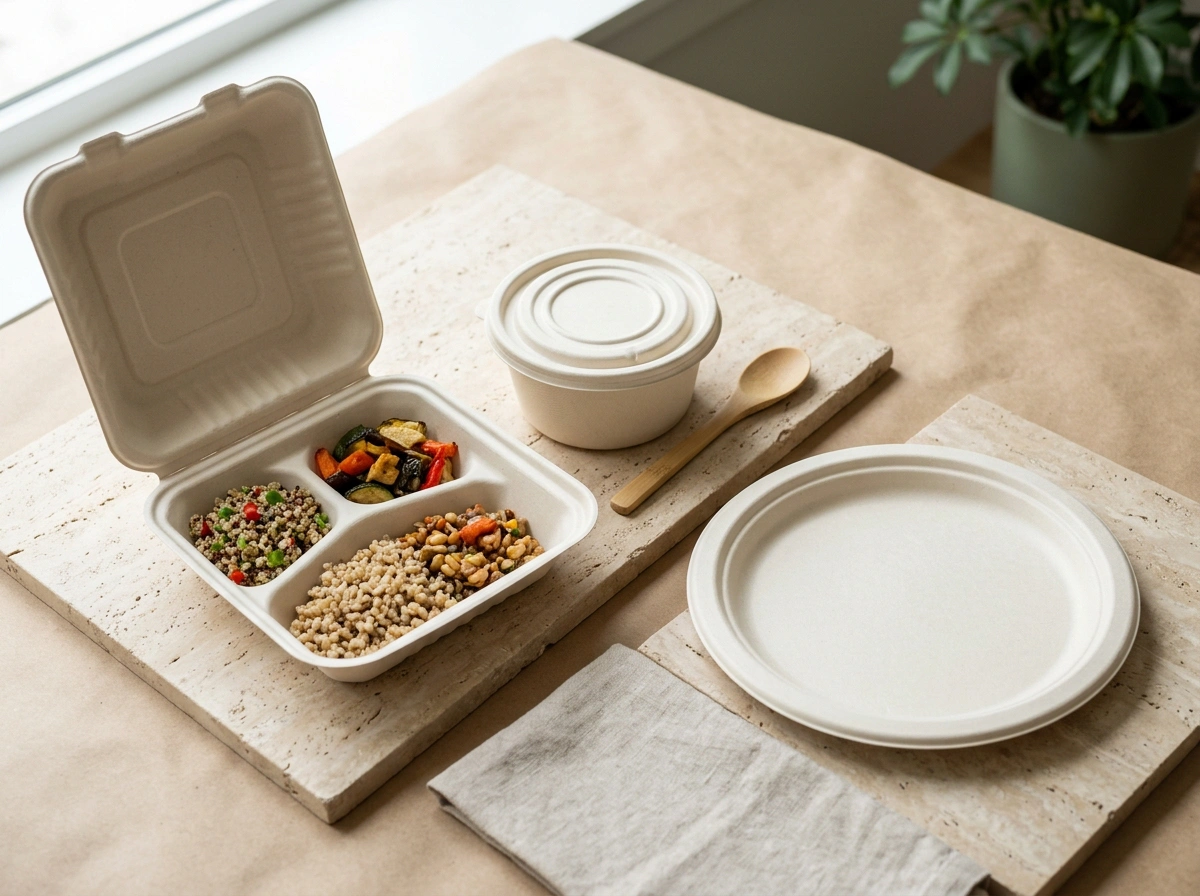

Direct Scientific Answer (AEO Snippet)
- 100% Biodegradable & Certified Compostable: Sugarcane bagasse is the fibrous plant matter remaining after extracting sugarcane juice. It consists of approximately 50% cellulose, 25% hemicellulose, and 20% lignin—natural organic biopolymers that soil microorganisms digest naturally.
- 60–90 Day Timeline: In commercial industrial composting facilities meeting EN 13432 or ASTM D6400 (58°C, moist aerobic environment), bagasse packaging completely disintegrates within 60 to 90 days.
- Zero Microplastics: Unlike PLA or PE-coated paper, pure molded bagasse contains no synthetic plastics, producing only natural organic biomass, water, and CO2.
1. Industrial Composting vs. Home Composting Timelines
Understanding the distinction between industrial composting facilities and home compost bins is essential for foodservice operators communicating sustainability metrics to consumers.
| Composting Method | Operating Temperature | Typical Breakdown Time | Applicable Standard | End Result |
|---|---|---|---|---|
| Industrial Facility | 55°C – 65°C (Thermophilic phase) | 60 – 90 Days | EN 13432, ASTM D6400, ISO 17088 | Rich humus, zero microplastics |
| Well-Managed Home Compost | 20°C – 35°C (Mesophilic phase) | 120 – 180 Days | NF T 51-800, AS 5810 (Home Compostable) | Garden compost / soil conditioner |
| Commercial Landfill | Anaerobic / Varied | 1 – 2 Years (Slow degradation) | Non-Ideal Disposal | Zero toxic persistent chemistry |
2. The 4 Biological Stages of Bagasse Breakdown
When bagasse foodware is placed into an active compost pile, it undergoes a predictable four-stage biochemical breakdown:
Ambient moisture softens the thermo-molded cellulose fibers, causing the container structure to loosen and absorb fungal spores.
Bacteria and actinomycetes proliferate, secreting cellulase enzymes that cleave cellulose polymer chains into basic sugars.
The packaging fragments into pieces smaller than 2mm, fulfilling the strict physical disintegration threshold under EN 13432.
Carbon atoms are converted into carbon dioxide and organic matter, enriching the resulting compost with beneficial carbon content.
3. Soil Safety, Heavy Metals & Ecotoxicity Standards
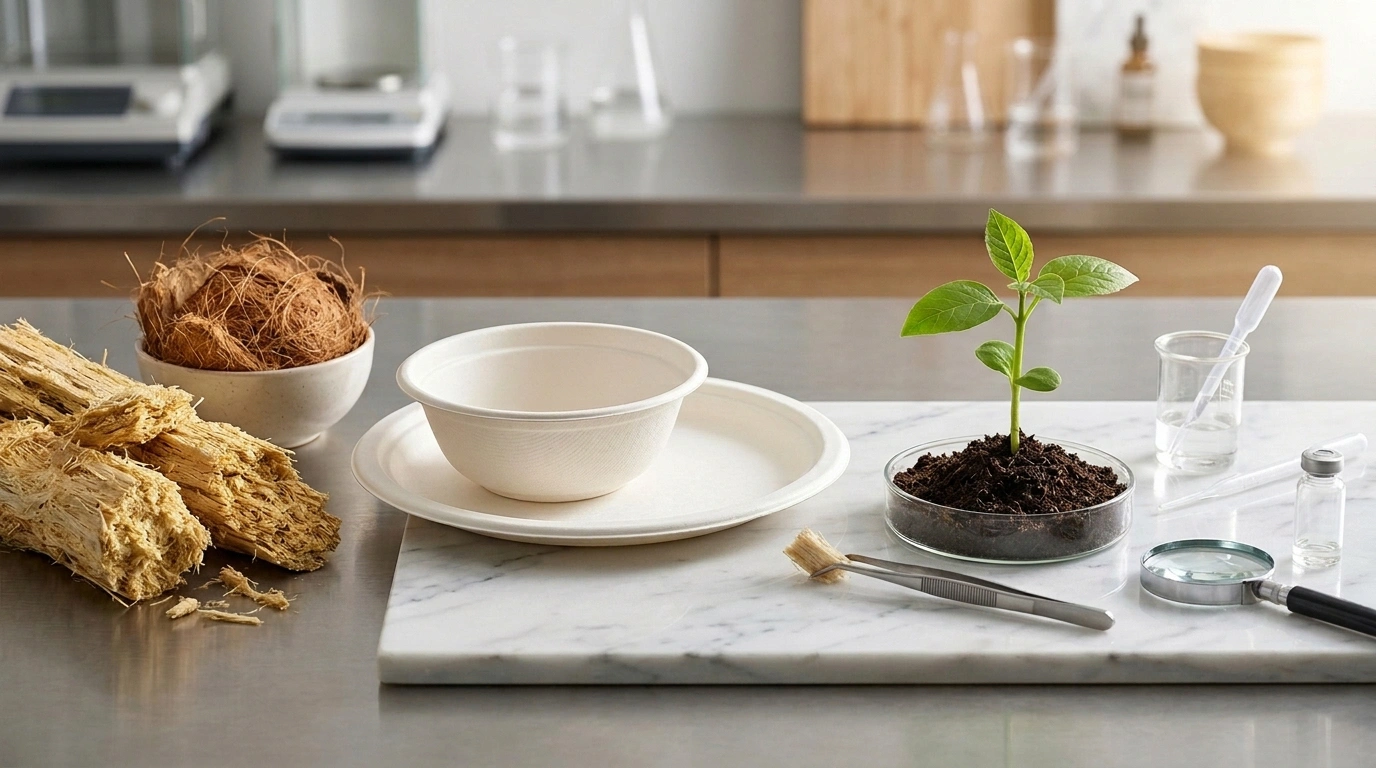
Ecotoxicity Verification: Under EN 13432 Clause A.4, the resulting compost must support healthy plant germination at a rate greater than 90% compared to blank control soil. Duong Hung bagasse products undergo rigorous plant growth trials (Hordeum vulgare and Sinapis alba) with verified zero negative phytotoxic effects.
Furthermore, independent inductive-coupled plasma (ICP) spectroscopy confirms heavy metal concentrations (Zinc, Copper, Nickel, Cadmium, Lead, Mercury, Arsenic) are well below 5% of allowable European limits.
4. Frequently Asked Questions (FAQ)
Yes! This is the primary operational advantage of bagasse over paper recycling. Traditional paper recycling mills reject food-contaminated containers because grease damages paper fibers. In contrast, organic composting welcomes food scraps and natural grease, as they serve as nutritional feedstock for thermophilic composting microbes.
"Biodegradable" simply means a material can break down by biological action over an undefined period of time (which could take 50 years). "Compostable" is a strictly certified standard requiring material to break down into non-toxic natural elements within a defined timeframe (under 90 days in industrial facilities) without leaving harmful residues. Duong Hung products are fully certified compostable.
Explore Certified Compostable Packaging
Request commercial sample boxes of our clamshells, takeout bowls, and plates with accompanying EN 13432 compost test reports.