

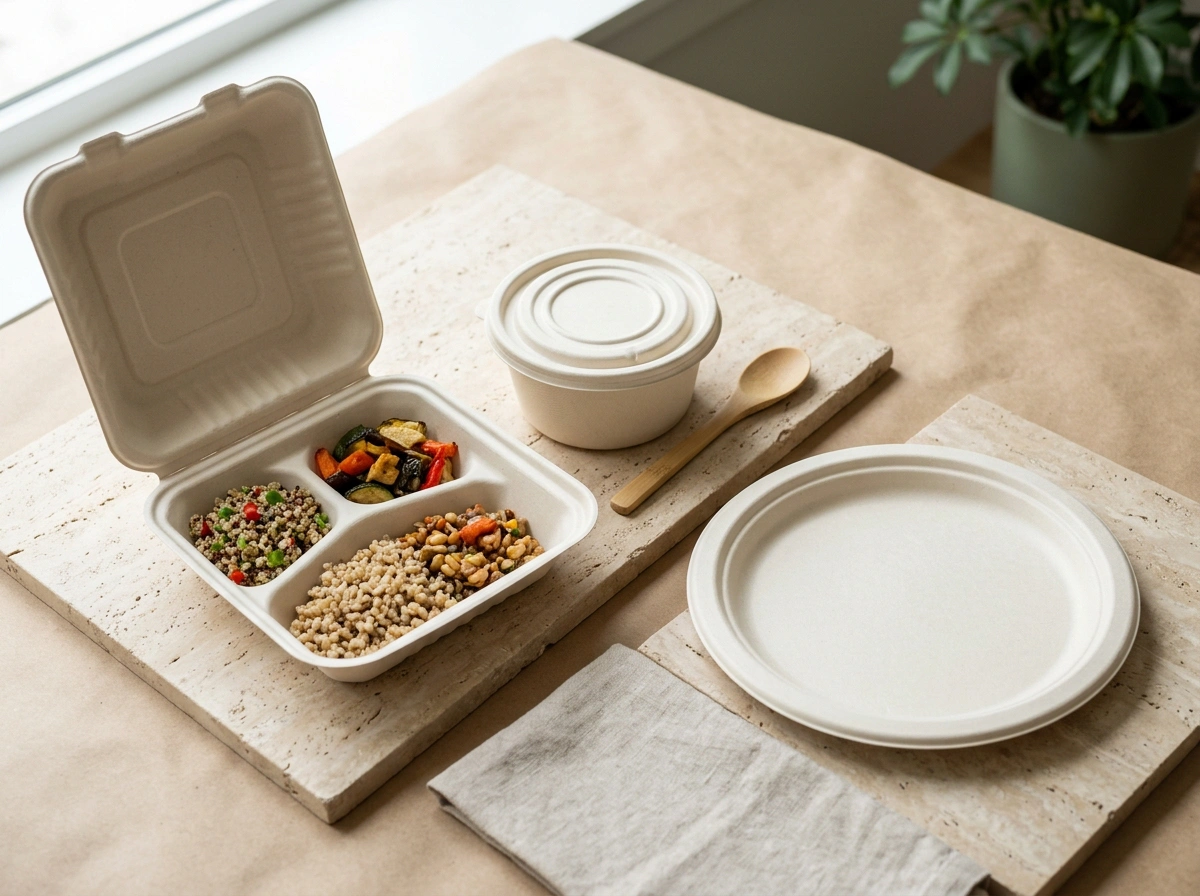

Executive Regulatory Summary (Direct Answer)
- Mandatory Recyclability & Compostability: The EU Packaging and Packaging Waste Regulation (PPWR) mandates that by 2030, all packaging marketed in the EU single market must be fully recyclable or industrially compostable under harmonized criteria.
- Zero PFAS Tolerance: The European Parliament and Council have enacted strict prohibitions against intentional PFAS ("forever chemicals") in food-contact packaging, setting maximum allowable thresholds at Total Organic Fluorine (TOF) < 50 ppm.
- Approved Vietnam Pathway: Duong Hung sugarcane bagasse clamshells, trays, and bowls certified to EN 13432 with verified PFAS-free bio-coatings offer European wholesalers an immediate, fully certified commercial replacement for EPS foam and plastic-coated paperboard.
1. European Packaging Legislation Timeline Matrix
The regulatory landscape across the European Union is undergoing its most significant overhaul in three decades. The progression from national directives to directly binding EU regulations creates strict enforcement mechanisms across all 27 member states.
| Timeline | Directive / Regulation | Direct Market Impact | Duong Hung Solution |
|---|---|---|---|
| Enacted (2021) | Single-Use Plastics (SUP) Directive 2019/904 | Total ban on EPS food containers, plastic beverage stirrers, plates, and cutlery. | Sugarcane bagasse takeout clamshells and unbleached fiber trays. |
| Enacted (2024-2025) | EU Deforestation Regulation (EUDR) | Mandates proof that wood and pulp do not originate from deforested land. | 100% Sugarcane Agricultural Residue (Zero timber pulp, zero deforestation risk). |
| Agreed (2026) | PPWR PFAS Restriction Clause | Strict threshold bans on fluorinated barrier chemicals in food packaging. | Certified water-based fluorochemical-free barrier technology (TOF < 10 ppm). |
| Target (2030) | PPWR Full Enforcement | 100% of all packaging must meet recyclability/compostability performance grades A/B. | Certified industrially compostable under EN 13432 & home compostable standards. |
2. Restrictions on Single-Use Packaging in Dine-In Venues
Under the PPWR Article 22 rules, single-use plastic and hybrid plastic packaging for condiments, sauces, and dine-in food service will face sweeping bans across restaurants and hotels. Fast-casual dining operators are required to adopt reusable systems for on-premise consumption while migrating takeaway channels strictly to non-plastic compostable packaging.
Takeaway Exemption: Certified plant-fiber foodware without plastic polymer lamination (PLA/PE-free) remains legally permissible for delivery, takeaway food services, and catering operations, provided they fulfill organic recovery criteria under European standards.
3. The PFAS Chemical Prohibition in European Food Contact Materials
Per- and polyfluoroalkyl substances (PFAS) have historically been utilized in molded fiber manufacturing to achieve oil and grease resistance. However, accumulating epidemiological evidence regarding bio-persistence has prompted the European Chemicals Agency (ECHA) and EU Parliament to mandate an outright ban in food packaging.
Duong Hung Eco has eliminated all fluorinated compounds across our entire bagasse production line. Our barrier matrix utilizes high-density cellulose refinement combined with proprietary bio-polymer surface sizing, delivering grease resistance up to 120°C without a single drop of PFAS chemistry.
4. European Packaging Importer Compliance Checklist
When clearing customs in Rotterdam, Hamburg, Antwerp, or Le Havre, European customs brokers require a standardized regulatory dossier:
- Declaration of Compliance (DoC): Issued pursuant to Regulation (EC) No 1935/2004 verifying food-contact safety.
- Overall & Specific Migration Testing: Independent SGS/TÜV test files fulfilling EU Regulation 10/2011 limits.
- Compostability Certification: Valid seedling mark or OK Compost industrial certificate verifying compliance with EN 13432.
- PFAS-Free Analytical Test Report: Total Fluorine / Total Organic Fluorine analysis demonstrating undetectable levels (< 50 mg/kg).
- Preferential Certificate of Origin (Form EUR.1): Under the EVFTA, Vietnamese plant-fiber products enter the EU with 0% import tariff.
5. Frequently Asked Questions (FAQ)
No. The EU Deforestation Regulation applies specifically to timber, wood pulp, cattle, cocoa, coffee, oil palm, rubber, and soya. Sugarcane bagasse is an agricultural by-product of sugar cane (Saccharum officinarum), meaning it is completely outside the scope of EUDR timber traceability declarations.
Under the EU-Vietnam Free Trade Agreement (EVFTA), goods classified under HS code 4823.69 or 4823.70 accompanied by a valid Certificate of Origin Form EUR.1 qualify for 0% preferential import tariff upon entry into any of the 27 EU member states.
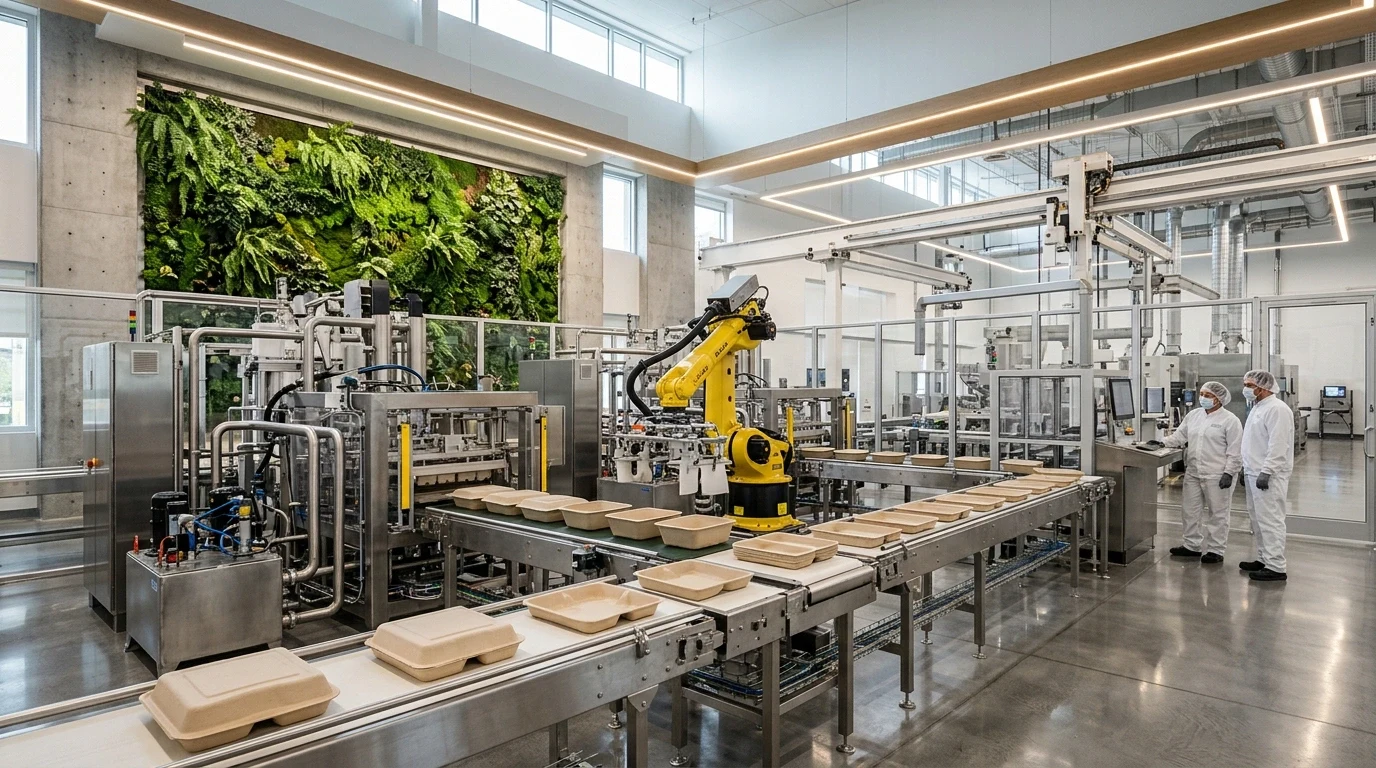
Request EU Compliance Dossier & Samples
Receive complete EN 13432 certificates, SGS PFAS-free test results, and factory technical datasheets for your procurement committee.